


Advantages and Application Examples of Laser Cladding Repair Processing for Sucker Rods
Contact Info
- Add:西安市国家民用航天产业基地航天基地299号西安建工科技创业基地十号楼4层, Zip:
- Contact: 段纯
- Tel:17392761868
- Email:gsjgkj@163.com
Other Products


Sucker rods are indispensable tools in the petroleum extraction process. Working long-term in harsh environments, they are prone to various damages such as wear and corrosion, leading to shortened service life and increased replacement frequency, which imposes significant cost pressures on oilfield production. However, with the development and application of laser cladding technology, the repair and reuse of sucker rods have become possible, not only substantially reducing oil extraction costs but also improving the overall economic efficiency of oilfields.
I. Principles of Laser Cladding Repair Technology for Sucker Rods
Laser cladding repair for sucker rods is an important branch of material surface modification technology. By definition, it involves using a high-energy laser beam as a heat source to precisely deliver specific alloy powder to the damaged areas of the sucker rod. Under the high energy of the laser beam, the alloy powder rapidly melts and fuses with a thin layer of the sucker rod's base material. After rapid cooling, a cladding layer metallurgically bonded to the substrate forms on the surface of the sucker rod.
From a microscopic perspective, during the laser cladding process, the highly concentrated energy of the laser beam enables the alloy powder and the substrate surface to reach a molten state in an extremely short time. At this point, strong diffusion and mixing occur between the alloy elements and the base metal atoms, forming a robust metallurgical bond. This bonding method results in a significantly higher bond strength between the cladding layer and the substrate compared to other surface treatment technologies, such as thermal spraying or electroplating. Additionally, due to the extremely fast cooling rate of laser cladding, typically reaching 10^6 K/s, the cladding layer can form very fine grain structures and even produce new phases that are unattainable under equilibrium conditions, such as metastable phases or amorphous states, thereby endowing the cladding layer with excellent properties.
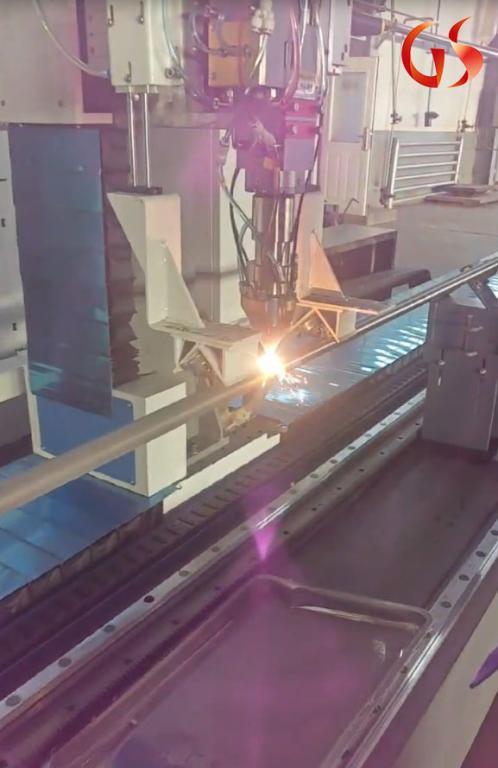
II. Compared with traditional repair methods, laser cladding repair for sucker rods offers significant advantages, mainly reflected in the following aspects:
1. High Metallurgical Bond Strength: Laser cladding uses a high-energy laser beam to slightly melt the workpiece surface while fully melting the alloy powder, forming a dense coating metallurgically bonded to the substrate. This bonding method not only ensures high strength but also results in a dense coating structure free from defects such as cracks.
2. Wear and Corrosion Resistance: Laser cladding can form an alloy layer with excellent corrosion and wear resistance on the surface of ordinary carbon steel workpieces, significantly enhancing the wear and corrosion resistance of sucker rods, thereby extending their service life.
3. Reduced Costs and Energy Consumption: Laser cladding technology enables the preparation of high-performance alloy surfaces on low-cost substrates, saving material costs. Additionally, due to the low heat input and minimal deformation during the laser cladding process, subsequent processing requirements are reduced, further lowering energy consumption and processing costs.
4. High Cladding Quality: The coating obtained through laser cladding has a low dilution rate (generally less than 5%) and forms a strong metallurgical bond or interfacial diffusion bond with the substrate. Moreover, the coating composition and dilution are controllable, ensuring high-quality coatings.
5. Good Flexibility: Laser cladding technology enables precise cladding repair on complex-shaped workpiece surfaces, making it suitable for repairing sucker rods of various materials and shapes.
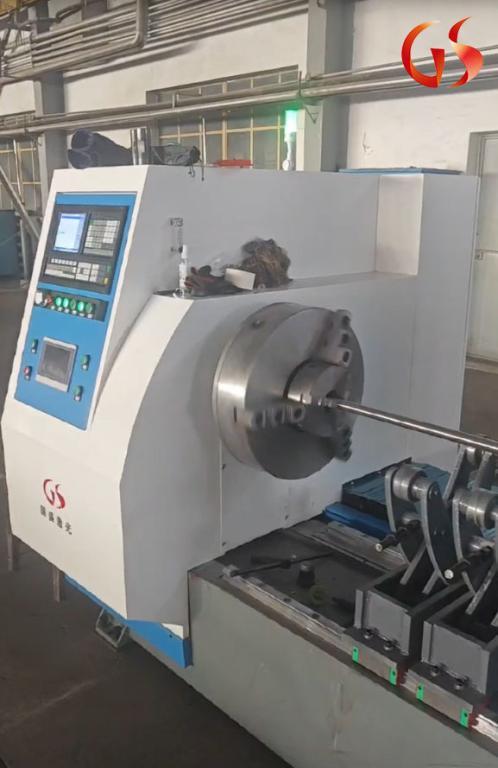
III. Application Examples of Laser Cladding Repair for Sucker Rods
Laser cladding repair technology for sucker rods has been widely applied in oilfield production, achieving remarkable results. Below are some typical application examples:
1. Surface Wear Repair of Sucker Rods: After long-term operation, sucker rods in a large oilfield exhibited severe wear marks, affecting efficiency and safety. Using laser cladding technology, a high-hardness, high-wear-resistant alloy coating was precisely applied to the worn areas. The repaired sucker rods not only regained their original performance but also significantly improved wear resistance, extended service life, and reduced costs associated with frequent replacements.
2. Corrosion Protection: In corrosive reservoir environments containing sulfur, salt, or other aggressive elements, sucker rods are highly susceptible to corrosion damage. Through laser cladding technology, a corrosion-resistant alloy layer is formed on the surface of sucker rods, effectively blocking the intrusion of corrosive media and significantly reducing corrosion rates, ensuring long-term stable operation.
3. Crack Repair and Strengthening: For micro-cracks caused by stress concentration or fatigue, laser cladding technology can precisely locate and repair these defects. Simultaneously, by cladding alloy powder, the strength of the material around the cracks is enhanced, improving the overall fatigue resistance of the sucker rods.
These application examples fully demonstrate the immense potential of laser cladding repair technology for sucker rods in enhancing equipment performance, reducing costs, and ensuring safe production. As the technology continues to advance and its applications deepen, laser cladding technology will showcase its unique advantages in more fields, contributing to the sustainable development of the petroleum extraction industry.
| Industry Category | Others |
|---|---|
| Product Category | |
| Brand: | 国盛激光 |
| Spec: | |
| Manufacturer: | 国盛激光 |
| Origin: | 116101 |


